

Rada Akbar
Afghanistan
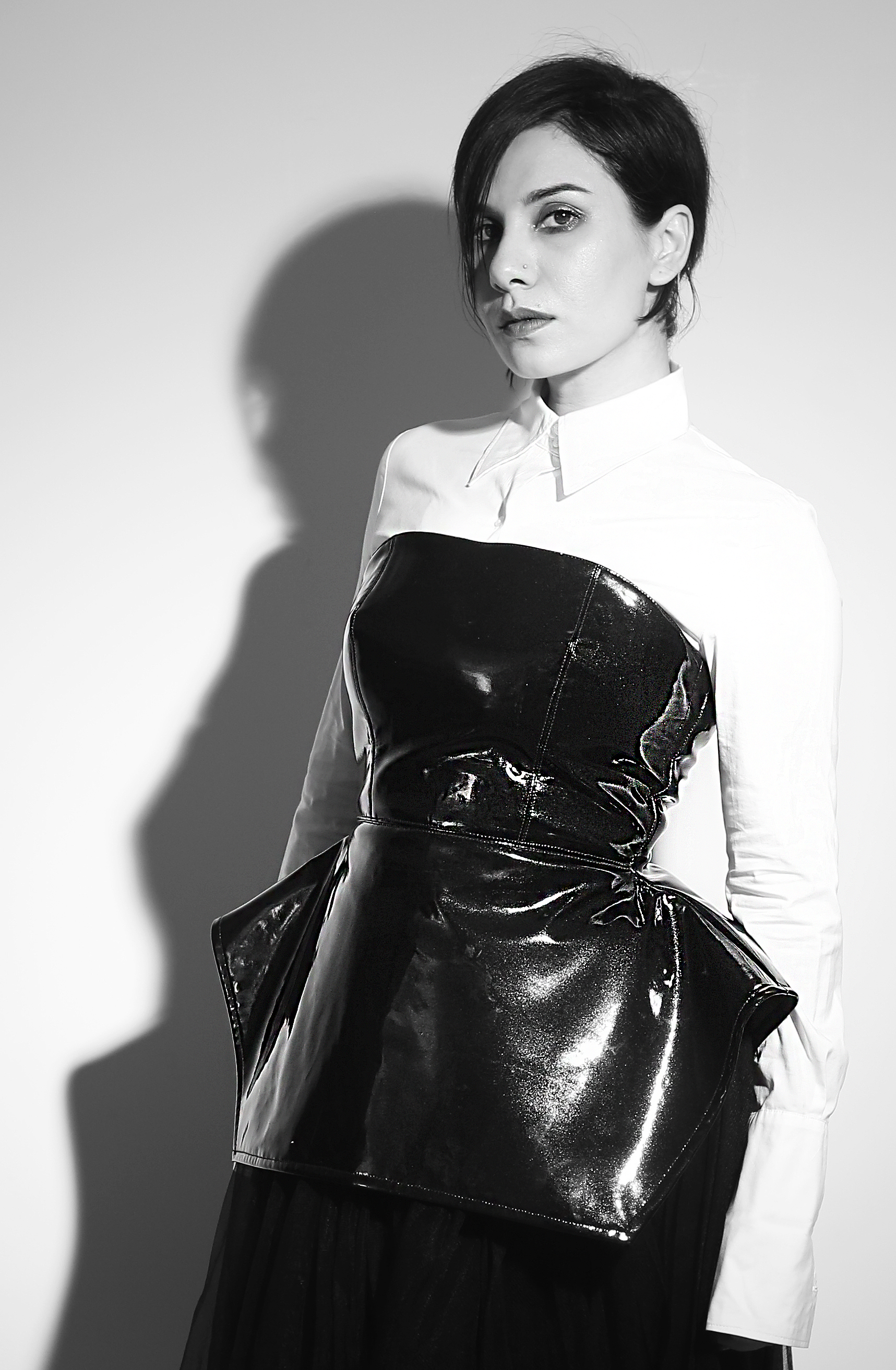
For Rada Akbar–an award-winning Afghan conceptual artist and photographer–the fight for women’s rights, and for liberation from gender oppression, implicates the entire world. If nothing else, her departure from Kabul and relocation to France was a stark lesson in fragility–how quickly a country can fall, but also, how hard-won rights everywhere can simply be taken away. In a conversation with ARC from her home in Paris, Rada reflects on that cataclysmic moment, on the role that her artistic work plays in overcoming two-dimensional narratives, and on the task of continuing her life and practice in exile.
An interplay between creativity and displacement entered Rada’s life early. Born in Jawzjan to educated and liberal parents in 1988, the Afghan-Soviet war was still raging. Amid the bombing, Rada and her family hid in basements. When the Taliban came to rule over the country for the first time in 1996, the family left, living in exile in Pakistan.
“We had to live in poor conditions. And it was my imagination and creation that helped me.”
In Afghanistan again, after the end of the first Taliban regime, art became the dominant force of Rada’s life, even as she faced challenges in balancing this with the daily pressures of supporting herself. She became a member of the Centre for Contemporary Art Afghanistan in 2007, and took part in organizing the First Female Painting and Modern Painting Exhibition in Kabul in 2008. As certain disciplines eclipsed others, the underpinnings of her work remained constant: Women were always at the forefront. What began with a focus on taboo subjects–like virginity, or the ways that religion was instrumentalized–was overtaken by a broad interest in her country’s history, and the roles that women played within it.
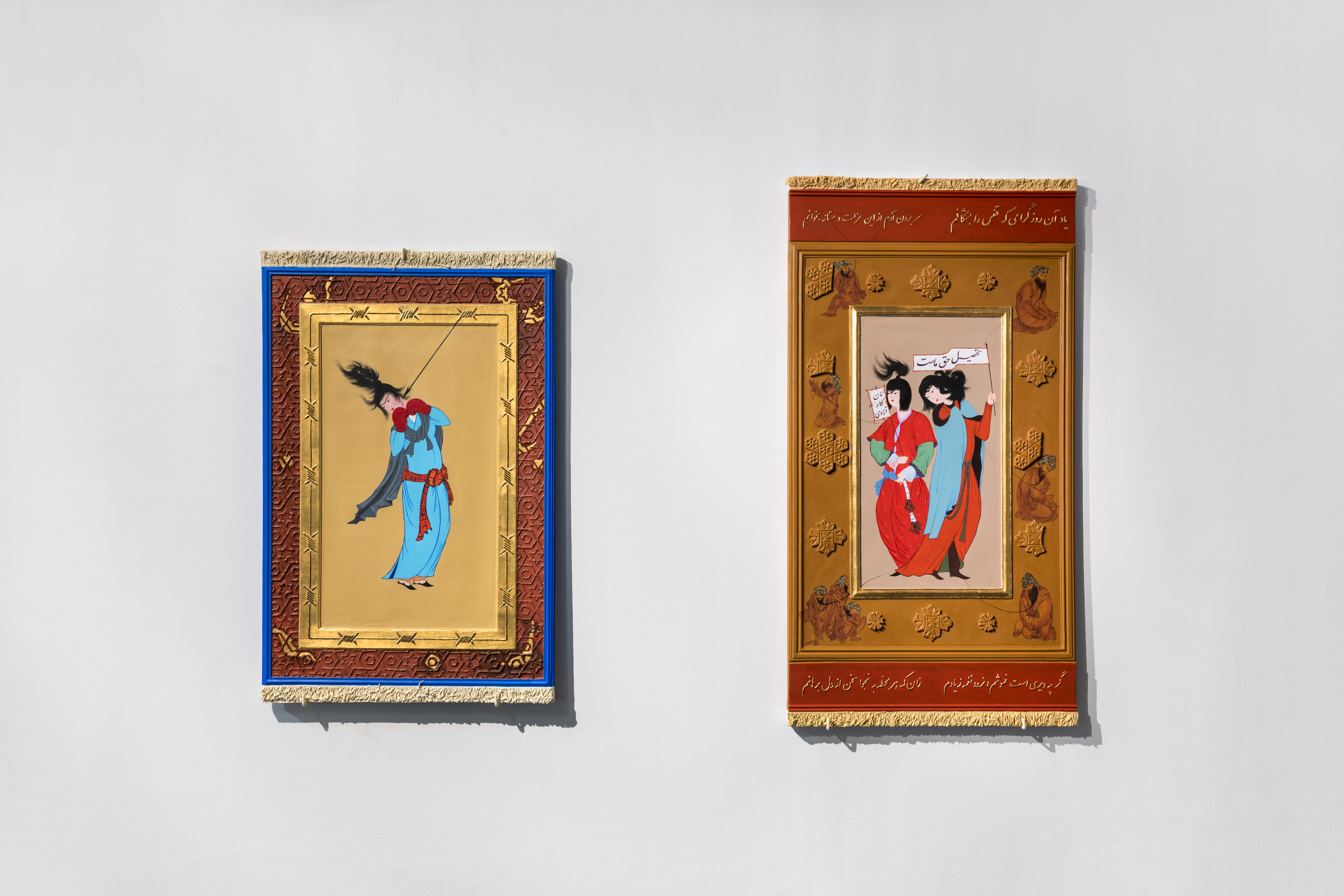
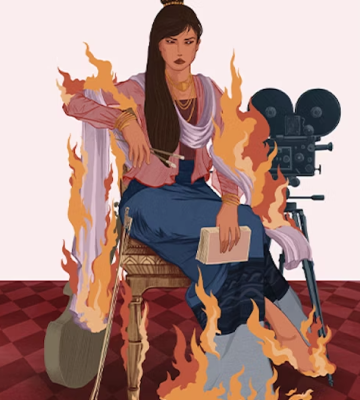
From the Infinite Power series at Cité internationale des arts. Image courtesy of the artist.
“You need to be a champion to survive and achieve your goals. If you are a victim, you disappear so easily. That was my main goal in focusing on the history of Afghan women: Not just to educate the rest of the world, but also ourselves–Afghans–because we lack knowledge and education about the past.”
In 2018, Rada began creating Abarzanan (Superwomen), a years-long project which paid homage to Afghan women throughout history. Conceiving of clothing as a “wearable monument,” Rada looked into the near and distant past of her country, deriving each piece she imagined from stories of Afghan heritage and of women’s fortitude. In turn, Rada would engage Afghan artisans of time-honored practices–such as embroidery, tile patterns, and traditional jewelry–to help her realize pieces of her designs. Two initial exhibitions of Abarzanan took place in Kabul in 2019 and 2020, to coincide with International Women’s Day. The eight women honored in 2020 showed the range of figures who captured her attention–from Afghan Queen Soraya Tarzi, who reigned from 1919 to 1929 and fought for women’s education, to Khalida Popalzai, who played football clandestinely as a girl despite persecution by the Taliban, later going on to help form the Afghan national women’s football team in 2007.
As an artist who challenges simplistic narratives of victims and saviours through her work, Rada understands that women’s rights remain a transnational concern, and that they must be actively safeguarded everywhere. She points to countries like the U.S., where hard-fought reproductive rights are under coordinated attack, and also sees issues in France, where some surface level markers for gender equality can obscure the fact that there is still much work to be done. In Europe, she notes, people often simply take their rights for granted, thinking “that everything was like this forever,” when, in reality, women in many European countries were not even allowed to open bank accounts until the 1970s.
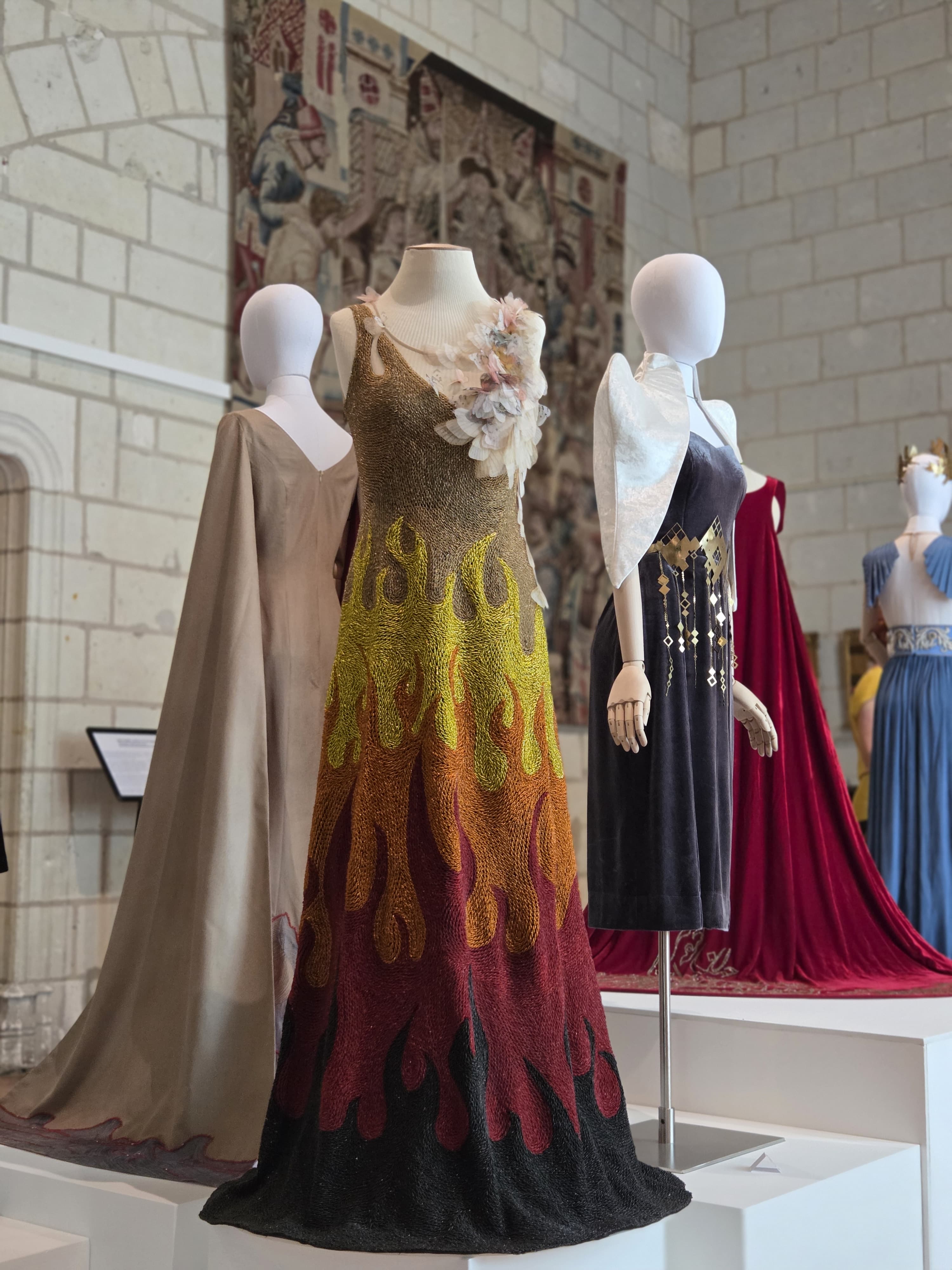
Pieces from Abarzanan series at Château de Saumur. Image courtesy of the artist.
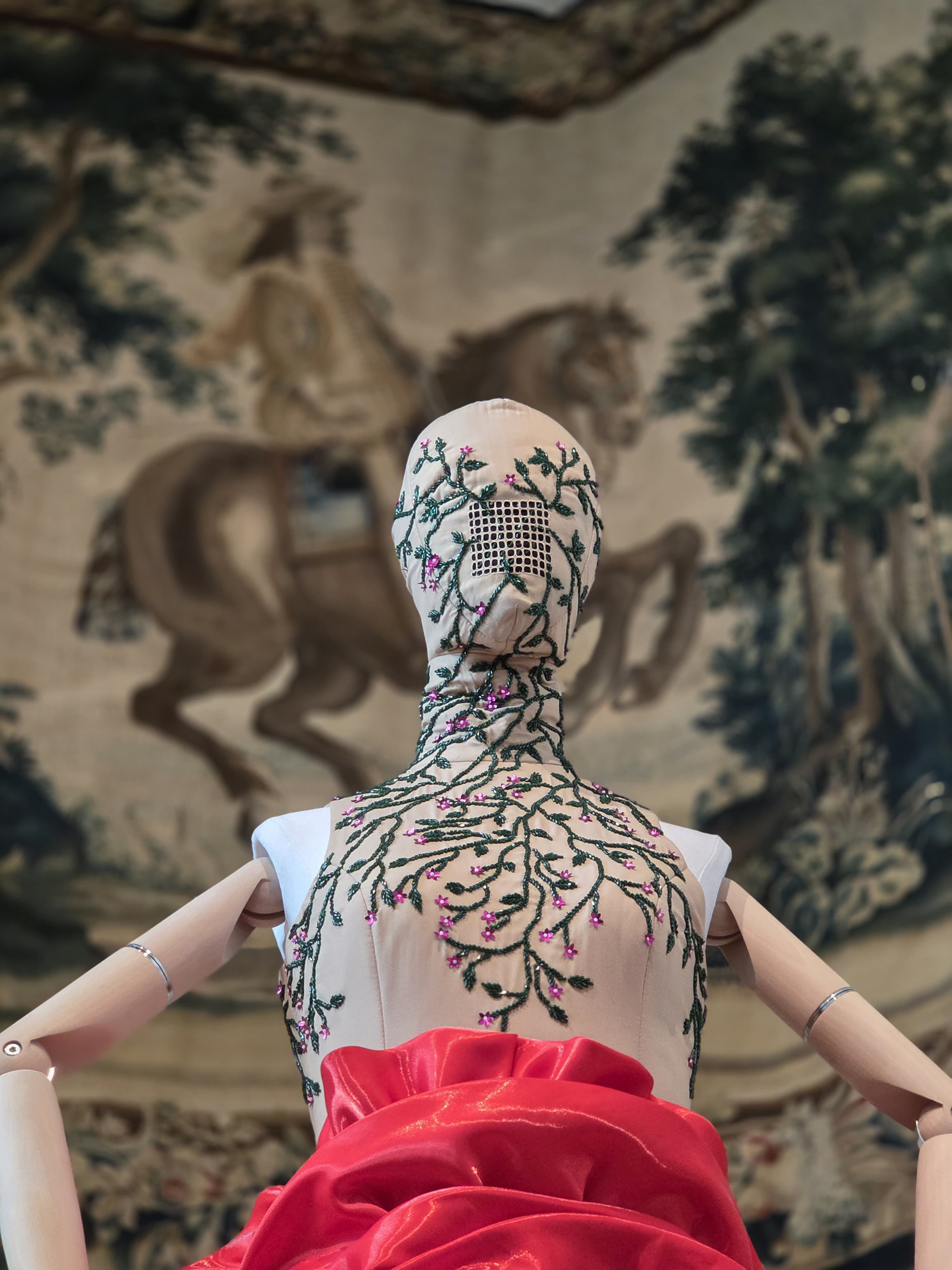
From Abarzanan series at Château de Saumur. Image courtesy of the artist.
“I wanted to show the real face of Afghan women, even if the rest of the world knew us only as victims.”
Of the visitors to Abarzanan in 2020, at least half were men. One young male visitor interviewed at the Kabul exhibition commented that it was “like a lesson for a whole new generation.” There was something undeniably hopeful in that sentiment–which underscores the scale of the loss that was to come.
“What happened in Afghanistan, I would say that even myself, I was in denial. You know, we’ve sacrificed so much for 20 years. It’s not possible to lose everything. But we lost everything overnight.”
As the security situation in Afghanistan rapidly deteriorated through the summer of 2021, and provincial capitals fell to a resurgent Taliban in the wake of the U.S. withdrawal, Rada became increasingly concerned about the future safety of her artwork. After arranging for friends to carry some of the wearable pieces from Abarzanan abroad, she sought help in protecting her larger works.
Without her knowing, a contact from AFP had been in touch with the French Embassy on her behalf. Suddenly, she was called in for a meeting she believed would concern protecting her work–much of which was earmarked for a future Women’s History Museum. Before the ambassador himself arrived, an unidentified cultural official, who provided no agenda for the meeting, offered Rada a slew of unsolicited advice: He told her that he didn’t think she’d be able to survive in Paris or in Western countries, that she’d be better off going to Iran, Pakistan, or India. He said, patronizingly, that she’d need to publish a book first if she ever wanted to get a residency.
Rada, who’d spent almost two years living in Sweden and over a decade as a working artist, was outraged. She shot back: “I’m not here to ask you for a favor. And you know, we are in an extremely vulnerable situation, so if you can’t help, please don’t add to our pain and suffering.”
After this strange, gratuitous act of condescension, Rada was at the point of walking out. But, the spirit of the meeting shifted completely as the ambassador arrived. He shared his appreciation for her work, and invited her to bring her larger pieces to the embassy. As long as the building was safe, he said, her work would be too. Later, the pieces would be shipped to Europe. The ambassador turned the conversation to her and her sister, at the time chair of the Afghan Independent Human Rights Commission: “And what about you?”
“It’s my work that I consider–it’s safety and security. I don’t want it to be destroyed, because I’ve invested a lot,” Rada affirmed. The ambassador understood, but predicting that the situation could soon worsen, began the accelerated process to obtain a long-term Schengen visa. Rada was told to pack up all of her artwork and bring it to the Embassy next Wednesday.
On Sunday, Afghanistan fell.
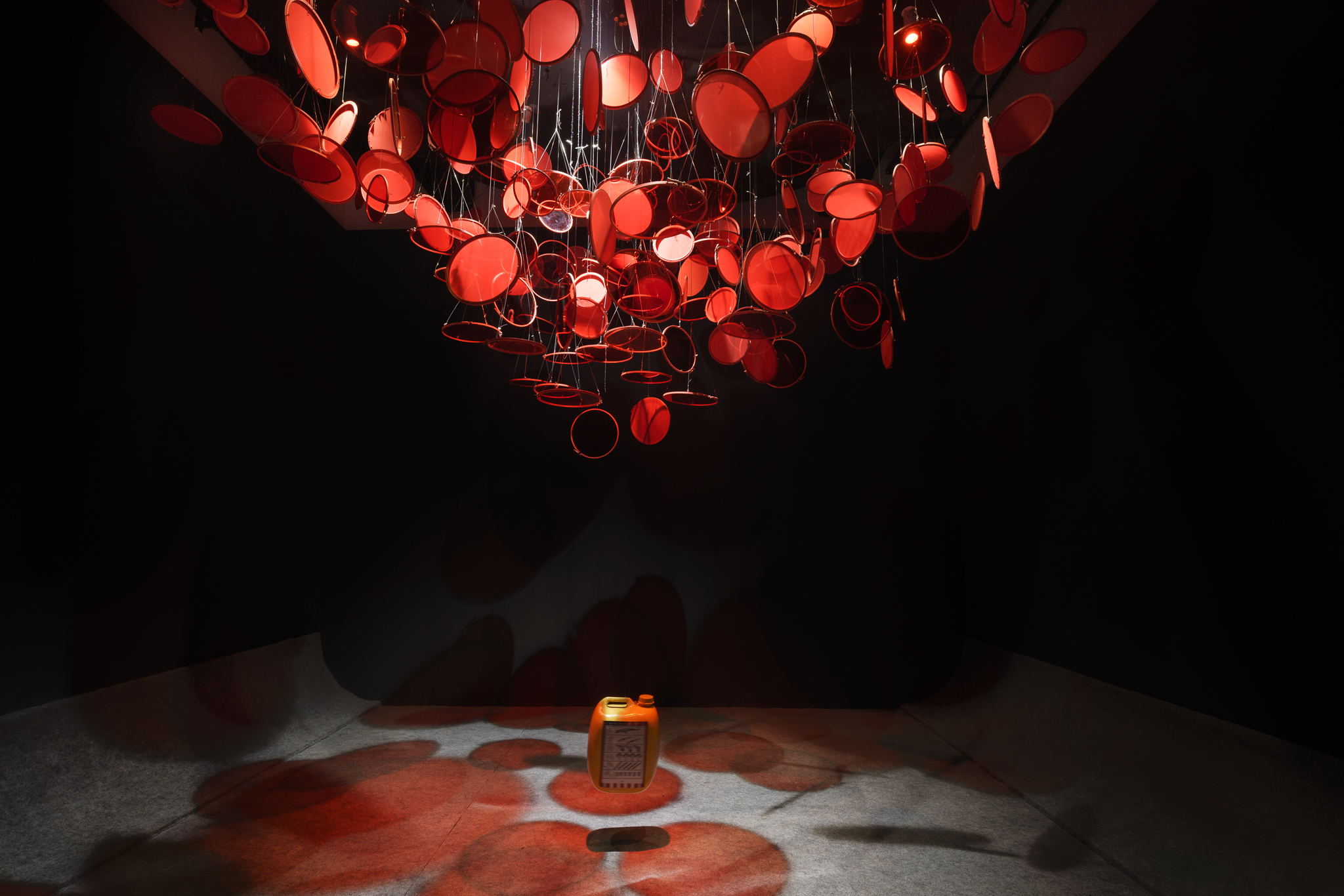
Displacement (2025) at Serendipity Arts Festival in Goa, India. Image courtesy of Serendipity Arts Festival.
“They’re here,” a friend said to her over the phone, crying. In Rada’s memory, the words did not quite register. They seemed like a lie.
The day before, as the Taliban were already surrounding the city, she called her brother, who worked for the National Security Council and had started clearing out his office that morning. He told her to stay inside her flat. As news of the collapse spread, Rada and her housemate Fatima were at home with a French journalist they were hosting, a young woman on her first assignment in Afghanistan. She was crying. Rada and Fatima comforted her, saying that she would be alright, that her country would look after her. The two remained composed, stunned and still in denial, wondering what awaited them. The young journalist received a call from the French Embassy. Then a second call came through for Rada.
“You can bring a maximum of 20 kilos. You only have one hour.”
There was no time to carry out the plan to save what remained of her artwork. Checking Twitter, Rada saw that the Taliban were still on the outskirts of Kabul. There was an agreement, soon to be broken, that they would stay there and not yet enter the city. She called her brother, who urged her to go. Then she called her mother, convinced that there was still time to see her, saying that she couldn’t leave without doing so.
Her mother’s words were unvarnished: “How can you be so naive to trust these people? They are here. If you don’t go now, you won’t see me again.” For months prior, Rada’s mother had begged her children–all of whom held positions in the country that placed them in peril, or like Rada, were well-known and outspoken voices–to leave. She remembered the family’s flight from the first Taliban regime, her husband’s name appearing on a list. It was the same old story repeating itself.
“I accept the loss. But I can’t accept the injustice.”
As the eyes of the world fixated on Kabul, Rada crossed the city, a 15 minute drive from her flat to the French Embassy. The next hours and days, walled up inside, were filled with negotiations and contingency plans that changed from minute to minute. Compared to others’ experiences, Rada’s departure was orderly: Eventually, the embassy reached an agreement with the Taliban, its occupants bussed directly into the secure perimeter within the city’s besieged airport. Rada’s mother, two brothers, and sister, were eventually able to leave as well–evacuating to Germany, due to her brother’s prior work in the country–a week later. She reflects on the guilt she felt, “being respected throughout the whole process” of leaving, whereas her family members were forced to endure days of dehumanizing treatment as they waited in crowds that were routinely tear-gassed, where live fire from European soldiers rang out, and where the threat of a suicide bombing was eerily present. Her family was allowed inside the secure zone only when they were able to contact the German ambassador directly. The anxiety and heartbreak of those days is palpable in Rada’s voice as she recounts the agonizing wait for information.
Today, the events of summer 2021 seem almost otherworldly, incomprehensible in both their gravity and in how quickly they appear to have been overlooked by much of the world. Rada continues to expand Abarzanan, continuing to honor the women of her country, but also widening the project to include women from other parts of the region and the world whose work has been erased or overlooked. This autumn, she will present new works at the TAMAT Museum in Tournai, Belgium, including three new wearable sculptures created with support from a residency through Universités en exil (UXIL) and ARC. Her work was recently on display in Même la poussière se souvient de moi (Even the Dust Remembers Me), an exhibition at Campus Condorcet in Paris. In free moments, Rada finds respite in the long, unhurried walks she takes through the city, reflecting on how Parisian streets belong to her in a way that simply was never the case in Kabul. Nonetheless, she is clear-eyed that there is no perfect country, no place without something left to fight for.
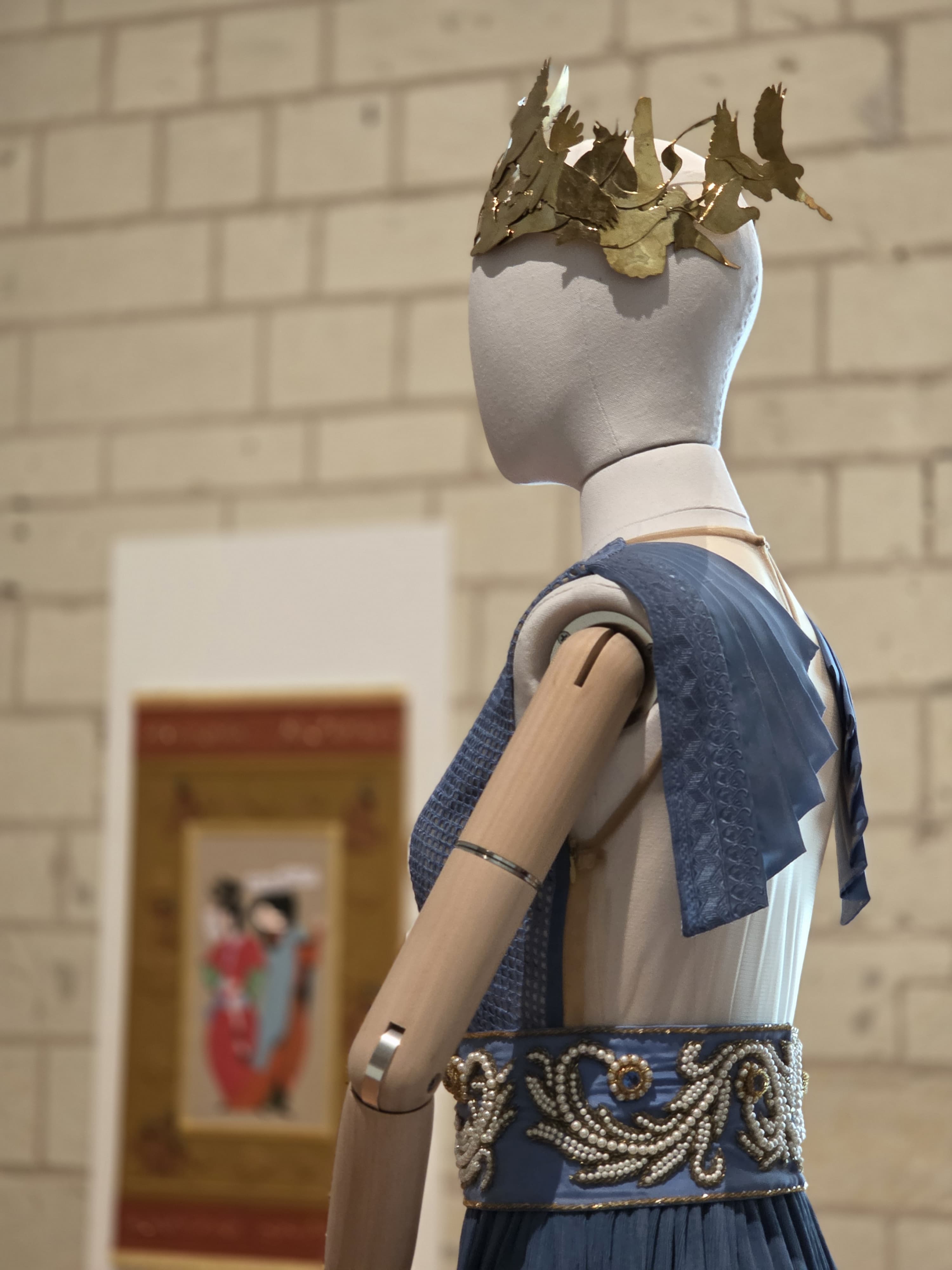
From Abarzanan series at Château de Saumur. Image courtesy of the artist.
“The only chance to move forward towards a more equal world for everyone is just to continue fighting. And that is why I believe that we have to educate our next generations about history. We have to concentrate on the history of women, so they know how they have been treated, and how much they have suffered, but also how much they contributed, and resisted.”
Written by Elias Ephron, ARC Editorial Communication Officer.