
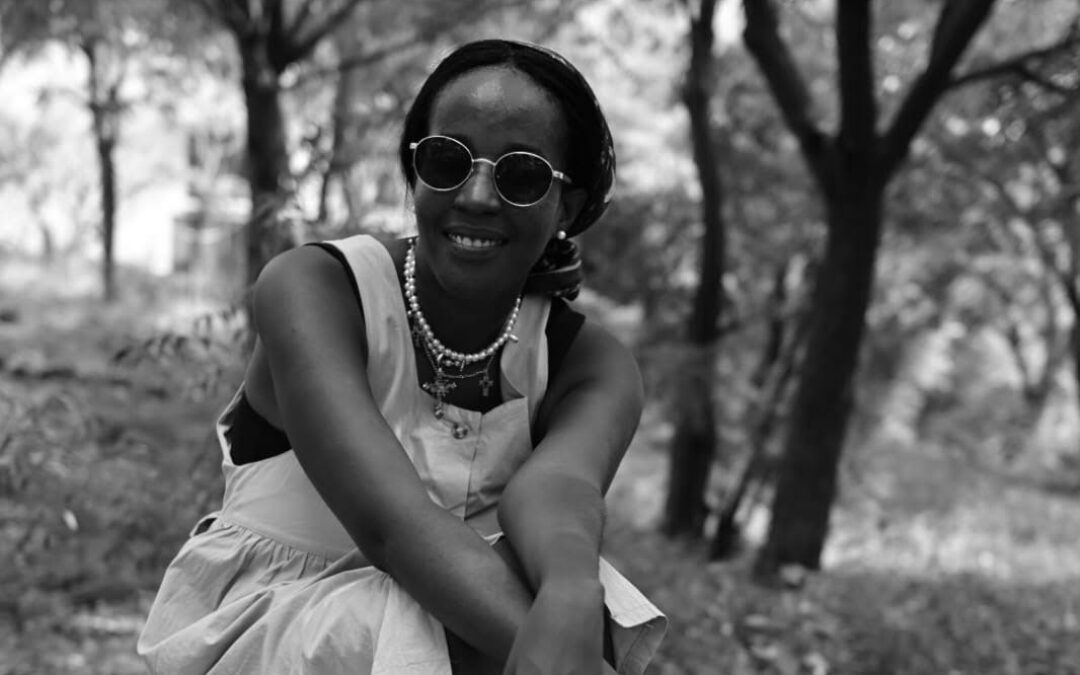
Trinah Kakyo
Multidisciplinary
Uganda
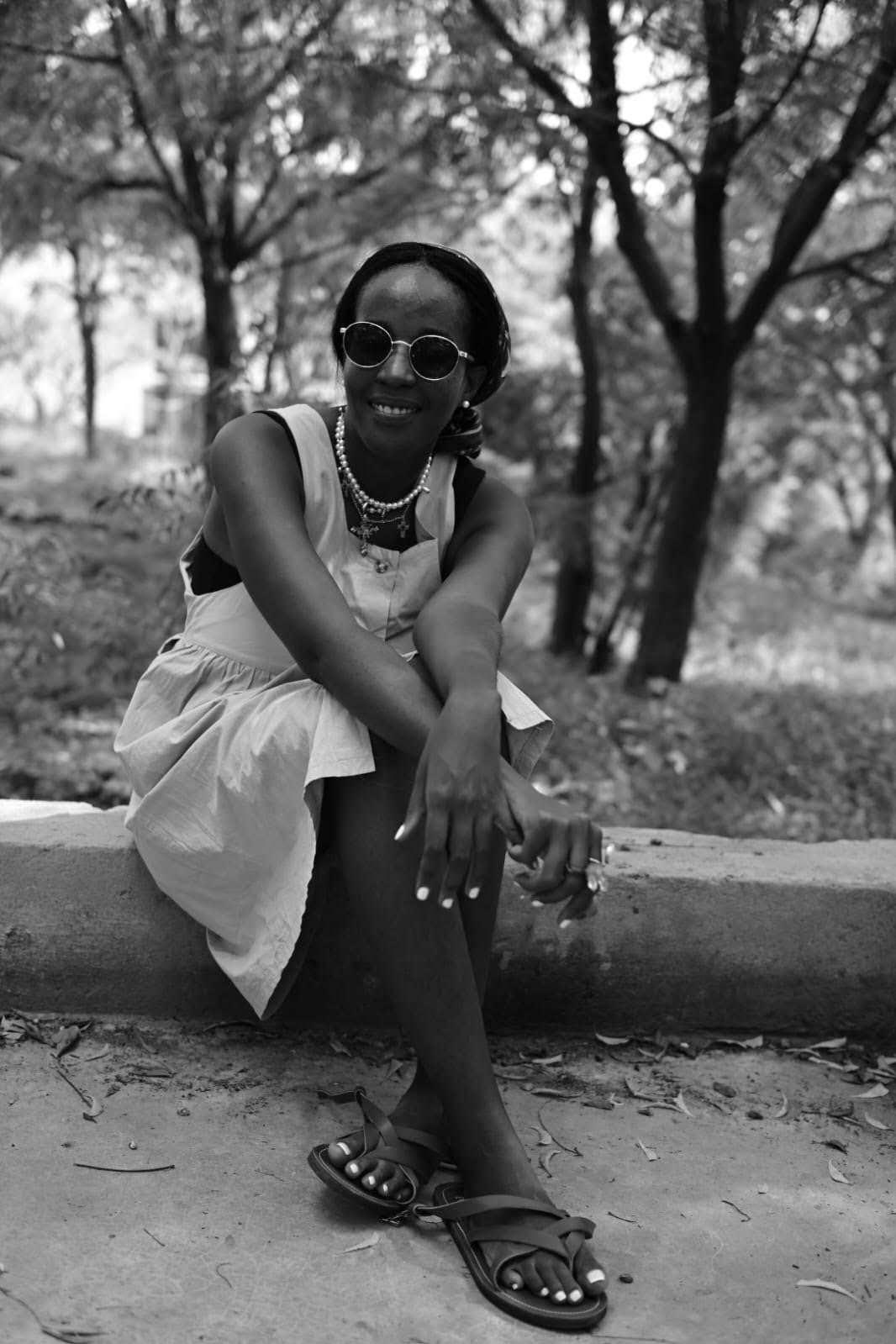
For Trinah Kakyo, queer organizing in Uganda has always begun with gathering.
Sometimes, those gatherings took place in underground parties with passwords shared clandestinely between friends, or at film screenings in private homes where queer Ugandans could briefly exhale together. Sometimes, it meant transforming her own home into a space for barbecues, poetry, dancing, and collective care. Across years of organizing, filmmaking, and festival work, Trinah has treated art not simply as expression, but as an infrastructure for the very survival of her community.
“Activism in Africa is also very in tune with the community, and creativity,” she says. “It’s us creating spaces that were denied [to us]. It’s us occupying places in a system that does not hold us.”
A queer multidisciplinary artist and organizer from Uganda, Trinah has spent years building spaces for queer East Africans through screenings, workshops, exhibitions, parties, and festivals. Her projects include the Kakyo Project, a collaborative hub for queer artists from across the continent, and the Uganda Human Rights Film Festival, which launched publicly last year despite growing repression against LGBTQ+ communities in Uganda.
Her journey into artistic activism began long before those projects took shape. As a child, she watched an aunt in western Uganda work with women widowed by HIV/AIDS through arts-and-crafts initiatives. Creativity, she says, became visible to her as “a tool for healing, and survival.”
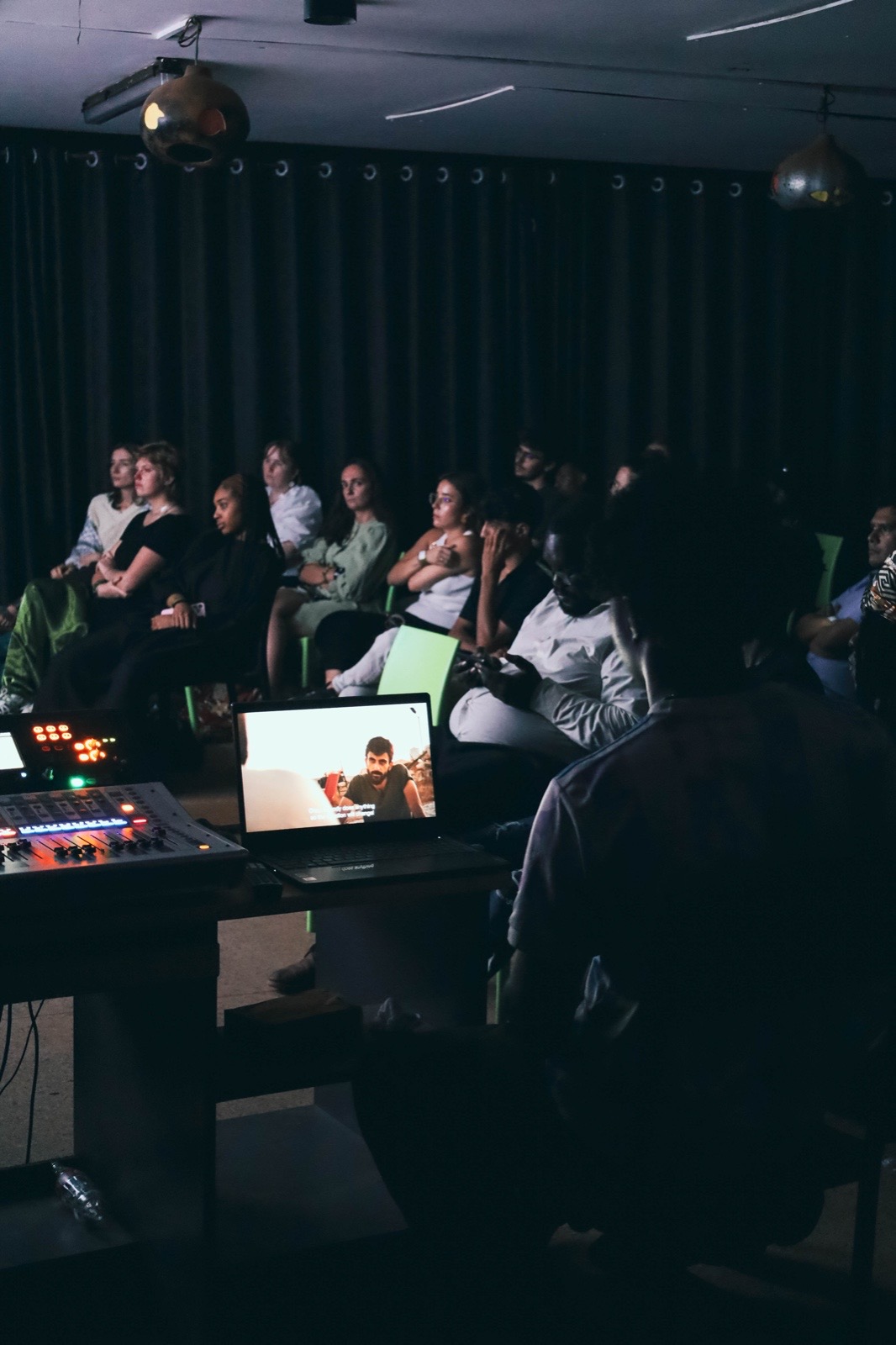
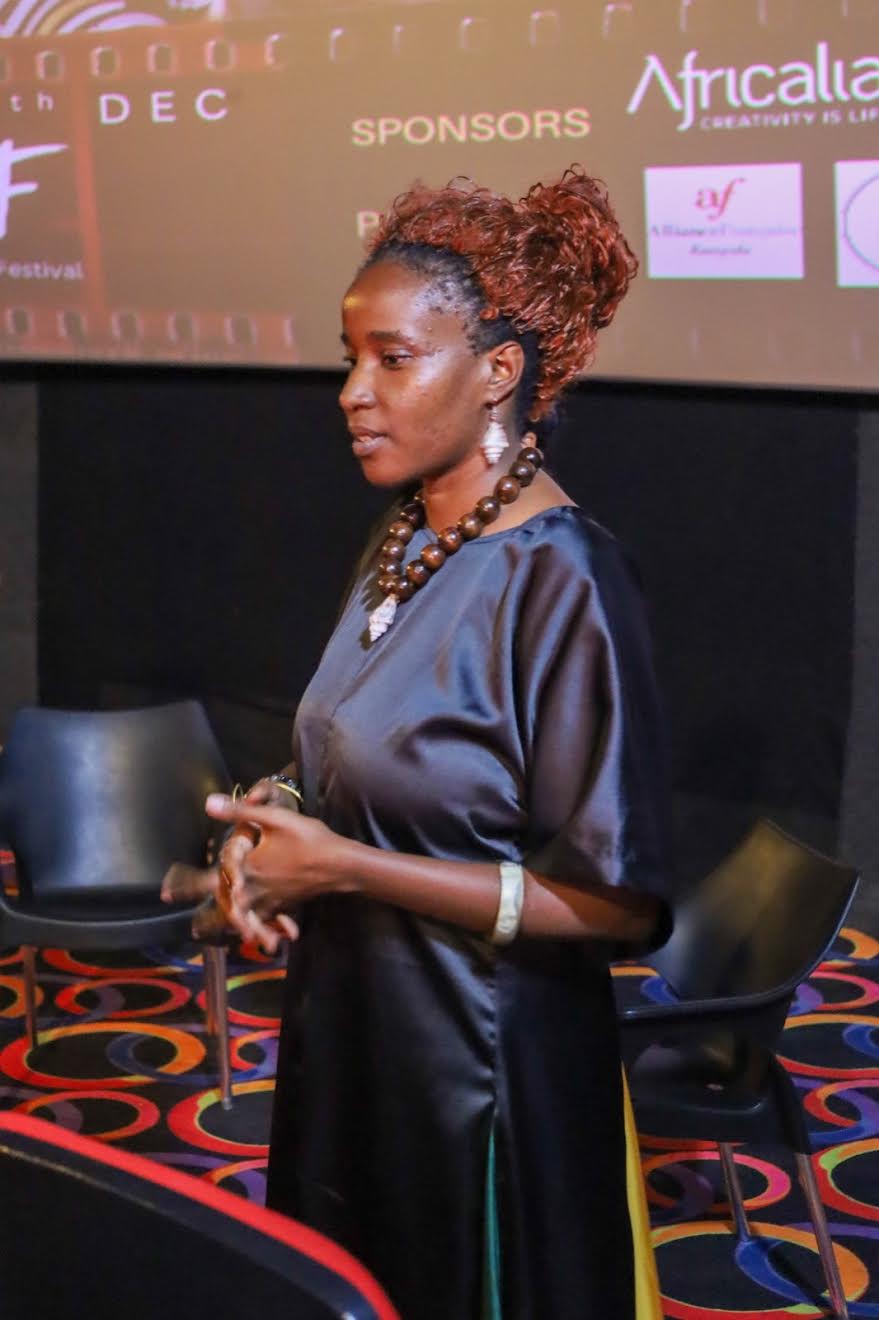
A screening at the Uganda Human Rights Film Festival. Image courtesy of Trinah Kakyo.
Later, as a young queer person in Uganda, she found herself attending inclusive music events organized by the pioneering Ugandan disc jockey DJ Rachel. In those spaces, surrounded by openly queer people for the first time, something in Trinah shifted.
“I remember going to her parties and seeing so many queer people and feeling so seen,” she recalls. “I knew I wanted to be part of spaces like this. I wanted to create spaces like this.”
Over time, those gatherings evolved into underground parties, collaborative exhibitions, and queer-centered screenings. Trinah organized intimate events where queer people could find a moment of tranquility in a country where queer existence was restricted and heavily policed. She later expanded her work internationally, collaborating with artists and organizers in Kenya, South Africa, Botswana, Fiji, and beyond.
But in the years that followed, organizing in Uganda proved increasingly difficult. Since the passage of Uganda’s colonially-inspired 2023 Anti-Homosexuality Act–which codifies numerous penalties, including a possible death sentence for homosexuality–queer Ugandans have faced heightened surveillance, online harassment, housing discrimination, threats to employment. Trinah describes a climate of mistrust and betrayal–where citizens are encouraged to act as informants against their queer neighbors, where landlords fear renting to queer tenants and employers fear legal repercussions for failing to report LGBTQ+ employees.
The risks extend from legislation into digital life as well. Online hate campaigns and outing pages on TikTok and other platforms have exposed queer people’s identities, addresses, and workplaces, forcing some to flee the country. For Trinah, surviving this environment–and continuing to organize in spite of it–has required near constant adaptation.
“Visibility is great because we’re able to inspire people, we’re able to create opportunity, but it’s also risky,” she says. “Survival is also an artistic practice for myself.”
That practice, crucially, includes care for self as a condition for continuance: “being able to rest, and having boundaries, [to] be slow, [to] be discerning.” Trinah now moves frequently between Uganda and Kenya while continuing to organize cultural projects across East Africa. She is currently developing the East African Fringe Festival, a multidisciplinary platform for queer performers, poets, theater-makers, and spoken-word artists–drawing inspiration from the Edinburgh Fringe Festival–that will include events in Nairobi and Kampala.
Even under mounting restrictions, she remains undaunted in her commitment to public cultural work. Last year, her Uganda Human Rights Film Festival succeeded in publicly screening queer films in Uganda–a bold, and historic achievement.
“We’d never screened a queer film publicly,” she explains. “Usually, if you put a queer film, it’s immediately banned.”
The festival managed to publicly screen two queer films, an achievement Trinah describes as deeply emotional.
“It was showing how you can be in a system while still carrying your powerful truths and identity and freedom.”
Not every film made it to the screen, however. One film, Abortion Dream Team, was blocked by authorities, forcing organizers to rethink their approach. Rather than cancel programming entirely, Trinah and her collaborators responded by creating the “Beyond Borders” initiative, a decentralized screening model that expanded into neighboring Kenya.
Throughout her conversation with ARC, Trinah returned repeatedly to the idea of creating worlds–in a wider, aspirational sense, but also in small but tangible ways: Turning a living room into a cinema, a backyard into a refuge for community, and a festival into a protective network.
For her, art is not separate from politics or survival. It is the mechanism through which queer communities retain joy and dignity under a system that wishes for their erasure.
“Our creativity is not separate from survival,” she says, “because it is survival.”
That understanding also shapes how Trinah thinks about decolonizing queer identity. In Uganda and across East Africa, she reflects, queer histories long predate colonial rule. She points to precolonial spiritual traditions, linguistic histories, and historical accounts of queer figures within Ugandan kingdoms as evidence that queerness is not foreign to African societies.
“The laws are actually still the same laws from colonization,” she says. “Queer people have always existed there.”
Decolonizing queer identity, for Trinah, means “reclaiming queerness through culture, rituals, storytelling, crafting together, softness, and living everyday life together.” It means understanding that queer life is not defined only by danger or resistance, but also by gathering, care, creativity, and joy
“Queer resistance in Uganda is not only a protest,” Trinah says. “It’s tenderness, weaving together, music, cooking, fashion, friendship, rest, collective care.”
That work continues to shape her own practice. Between Uganda and Kenya, she is developing new festivals, building transnational queer solidarity, and continuing to envision spaces where queer artists can gather, perform, and experiment together.
“Even under pressure we’re still creating,” she says. “And that itself is revolutionary.”
Decolonizing queer identity, for Trinah, means “reclaiming queerness through culture, rituals, storytelling, crafting together, softness, and living everyday life together.” It means recognizing queerness not only through struggle, but through “joy, spirituality, creativity, imagination.”
“What gives me hope is always community,” she says. “Queer Africans and queer people in general will continue to create, to love, to dance.”
Even after raids, bans, and pervasive fear, communities regroup and persist. Artists continue making work. New generations keep building together. A queer, transnational solidarity
“Queer resistance in Uganda is not only a protest,” Trinah says. “It’s tenderness, weaving together, music, cooking, fashion, friendship, rest, collective care.”
That persistence, she believes, is itself revolutionary.
“Even under immense pressure,” she says, “we’re imagining futures together.”