

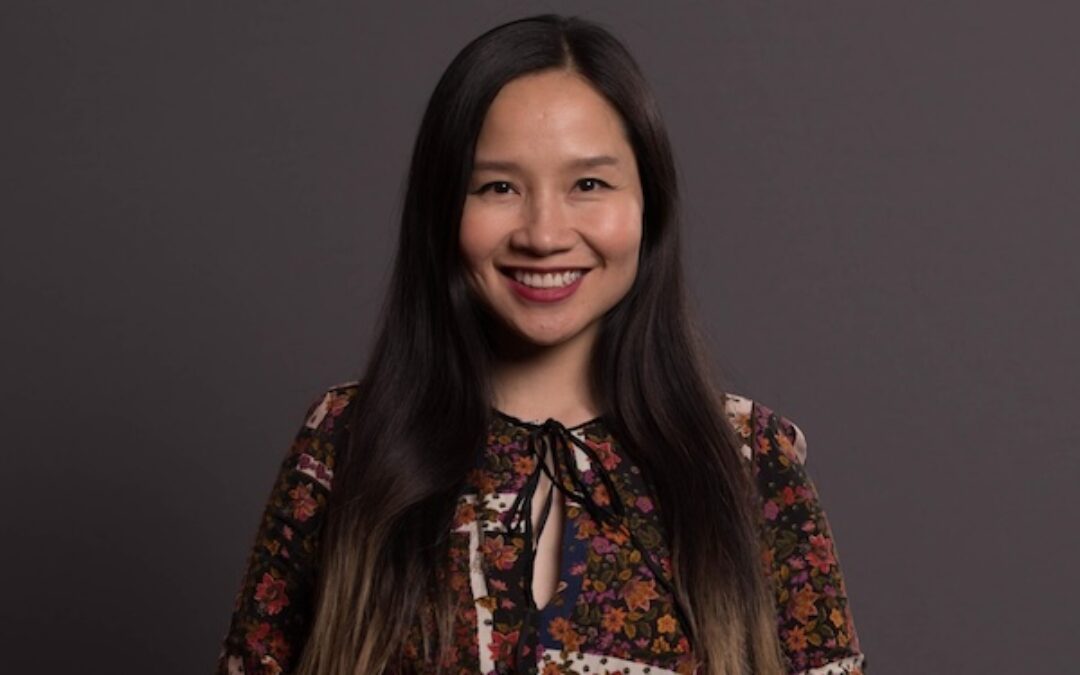
Mai Khôi
Musician, Singer
Vietnam
Singing in the Shadows of Censorship
Mai Khôi’s journey from a carefree childhood in Vietnam to a bold advocate for artistic freedom is a story of resilience and defiance. Growing up unaware of the invisible boundaries shaping creative expression in her country, it wasn’t until she moved to Saigon to pursue her singing career that she came face-to-face with Vietnam’s intricate web of censorship.
Her debut album, KHÔI, marked the beginning of her battles with the state’s tight grip on artistic expression. Although the album primarily featured love songs, including works by the iconic singer-songwriter, painter and poet Trịnh Công Sơn, it underwent a month-long government review. While nothing was censored, the process served as a stark reminder of the cultural department’s authority over creative output.
With her second album, Mai Khôi pushed boundaries, featuring her own compositions. This time, she faced harsher scrutiny, and one of her songs was censored for its lyrical exploration of passion, beauty, relationships, and the body—themes deemed too provocative by government censors. “Artists like me live under a system where the government decides what is acceptable or not. It’s a constant struggle to express ourselves,” Mai Khôi reflected.
A Call for Change: From Artist to Activist
Determined to challenge the system from within, Mai Khôi began networking with dissidents and like-minded artists, including journalist-poet Lý Đợi and visual artist-poet Bùi Chát. Their discussions inspired her to seek ways to enact change.
In 2016, when there was a call for independent candidates in Vietnam, Mai Khôi decided to run for office, encouraged by Bùi Chát. Her candidacy aimed to bring reform to the restrictive environment for artists and activists. However, the decision came with consequences. Just three weeks after her nomination, her concerts were raided, and her ability to perform freely was curtailed.
In response, in the following year Khôi formed the avant-garde band Mai Khôi and the Dissidents, through which she explored new forms of musical expression . This band, which primarily performed in secret, still faced harassment and was eventually forced to change its name to Mai Khôi Chém Gió.
Escalation and Exile
In October 2019, the arrest of her friend, filmmaker-visual artist Thịnh Nguyễn marked a turning point. The police raided his home, confiscating computers, cameras, hard drives, banned books and Mai Khôi’s albums. When she protested for his release, the authorities threatened her with arrest. Having previously been detained after meeting with former president Obama without obtaining official permission in 2016 and at Noi Bai International Airport in Hanoi by the counterterrorism department in 2018, Mai Khôi realized it was no longer safe for her in Vietnam. By the end of October 2019, she fled to the United States, facilitated by a visa and the premiere of the documentary Mai Khôi and the Dissidents.
Reinventing in Exile: Music, Activism, and Community
The transition to life in exile transformed Mai Khôi’s music and activism. In Vietnam, she had support from studio owner-producer Nguyễn Nhất Lý, who helped her to produce albums and concerts despite her political views. However, no record label in Vietnam was willing to support her activism. The only album by Mai Khôi Chém Gió, Dissent: Live at Phusalab, was released by LIDIO – Safemuse Sounds in Oslo.
In the U.S., Mai Khôi continued to face challenges finding collaborators. Her album Antibody, a collaboration with Lebanese singer Hamed Sinno and supported by PEN America, marked a significant milestone. Later, recruiting local musicians, she reformed Mai Khôi and the Dissidents in Pittsburgh, Pennsylvania, where she created the autobiographical-multimedia musical performance Bad Activist and recorded the new album FIVE YEARS IN EXILE, for which she has been seeking a record label for a planned release in 2025.
Through her writing and lyrics, Mai Khôi continues to challenge oppressive systems and reimagine a world where freedom of expression flourishes. Her music has become a vessel for storytelling, weaving together her personal journey and the broader struggle for human rights.
Future Endeavors: Cooking Opera and Cultural Heritage
In 2025, Mai Khôi is embarking on a new creative venture: a web-based opera-cooking show. Combining her love for Vietnamese cuisine and music, this project aims to share her journey through dishes that reflect her life in Vietnam and in exile. The first dish in this series, Rau Muong (water spinach), symbolizes her roots and resilience. “Food and music are my ways of preserving and sharing my culture, even in exile,” she shared.
Advocacy and Artistic Legacy
Mai Khôi’s journey from Vietnam’s censorship system to global dissidence highlights her unwavering commitment to free expression. Supported by organizations like City of Asylum, Safemuse, PEN America, Artistic Freedom Initiative, Tamizdat, Artist Protection Fund, Artists at Risk Connection (ARC), University of Pittsburgh, International Free Expression Project, 1Hood, and Light Education Initiative, she has been able to navigate the challenges of exile while continuing to advocate for artistic freedom. Through her music, activism, and cultural projects, Mai Khôi remains a powerful voice for change, inspiring others to challenge oppression and celebrate creativity.
Despite this support, Mai Khôi’s political views are not universally welcomed. The Vietnamese American community, many of whom opposed her anti-Trump stance, boycotted her performances. “It’s disheartening when your own community turns against you for standing up for what you believe in,” Mai Khôi noted.
Undeterred, she continues to perform and share her story through projects like Bad Activist and FIVE YEARS IN EXILE. Her music, activism, and lyrics remain a testament to her resilience and her unwavering commitment to envisioning a freer, more just world.
Written by Anh-Thu Vo. Anh-Thu is the former manager of research and advocacy for the PEN/Barbey Freedom to Write Center at PEN America.