


Didier Awadi
Rapper
Senegal
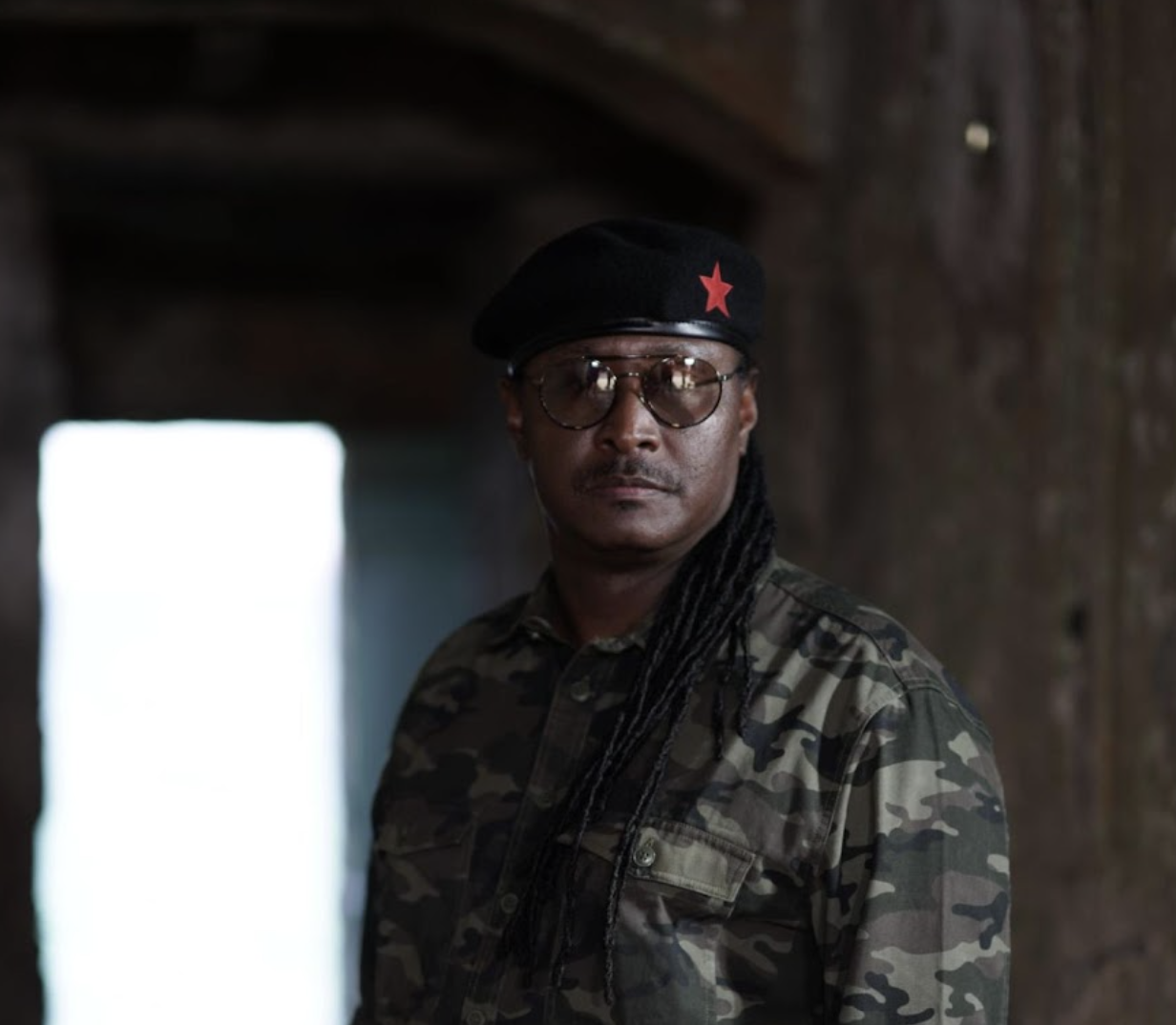
By Juliette Verlaque, June 2023. Originally published in Art Is Power: 20 Artists on How They Fight for Justice and Inspire Change.
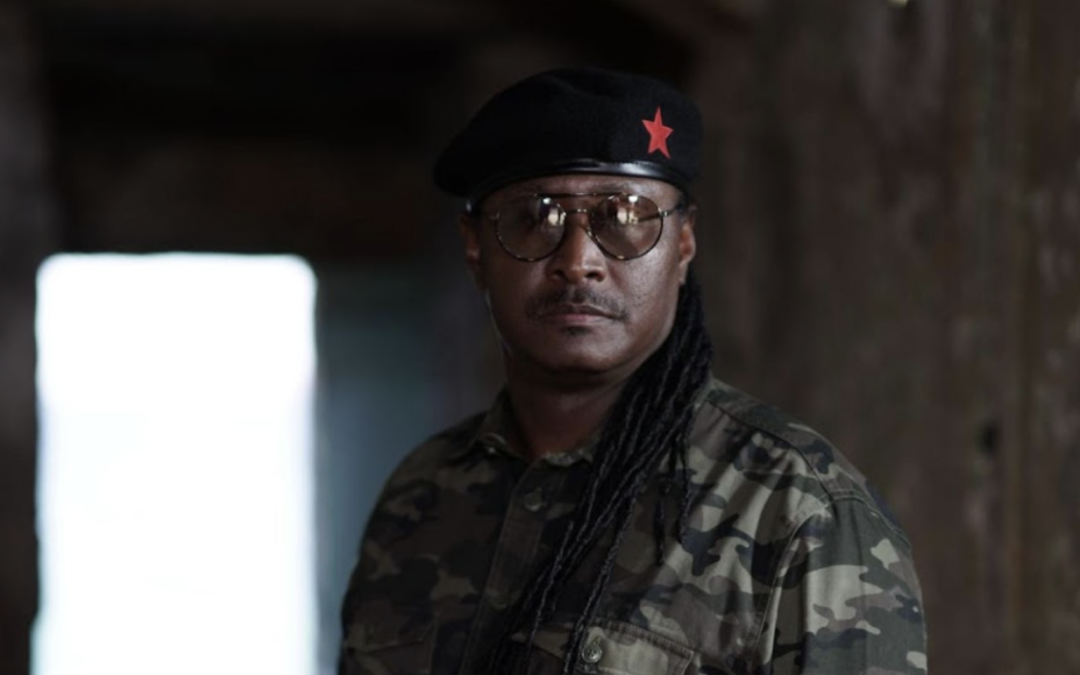
Senegalese rapper Didier Awadi has mobilized and educated a generation of young people over three decades as a trailblazing figure in francophone West African hip-hop.
His path to becoming a globally renowned musician and activist started during his teenage years, when he began listening to hip-hop, rap, and reggae artists like Public Enemy and Bob Marley. He soon began to perform with his friends at school. At first, their intentions were straightforward: “We did it to please the girls and make pocket money!” Awadi remembers. “We didn’t want to make revolutions.”
Their outlook shifted in 1988, when they met Stevie Wonder’s manager during a visit to their school and he shared a key piece of advice with them: Write their songs in Wolof, the most widely spoken language in Senegal, rather than in French or English. At first the boys resisted. “We got angry with him,” Awadi recalls. “We thought he didn’t understand anything.” But as soon as they wrote their first song in Wolof, they realized that it had a much larger impact and reach. “When we did these songs in Wolof, … we realized that what we were saying was of interest to the people, and especially old people,” he says. “Those who thought we were crazy in the neighborhood, they started to say, ‘Oh yes, these young people are not stupid. Do you hear what they say in their lyrics?’”
In 1989, Awadi founded a hip-hop group with his friend and collaborator Amadou Barry. They named their group Positive Black Soul (PBS). Although they didn’t realize it at the time, Awadi notes that this philosophy shared in the core theses of “negritude,” a literary and ideological framework with roots in Senegal that is aimed at raising and cultivating Black consciousness across Africa and African diasporas. PBS made music in French, Wolof, and English, and they regularly used Senegalese instruments during live performances. Awadi, a former breakdancer, would dance across the length of the stage, often dressed in a trademark red, gold, and green tracksuit that represented the colors of Senegal’s flag.
From the beginning, he says, it was important to him to ground his music and lyrics in the concept of “conscious rap.” “It was inconceivable that you would rap without saying anything at all,” he says. While “there are some people who are not raising consciousness but who make very good music, we realized that every time you take a real stand, you gain real respect in your community because they realize that they can trust you when you take care of their problems. And it becomes your mission.”
During the 1990s, Awadi became involved in a nationwide voter registration drive, working with his friends and members of the hip-hop community to register voters and encourage them to vote. In February 2000, on the eve of President Abdou Diouf’s 20th year in power, Senegal was preparing to hold a historic presidential election, the first democratic election of the new millennium. “We couldn’t take it anymore,” Awadi says. “We said this system must change. We pushed people to vote massively, especially young people, to understand that everything depends on them. And thank God, it worked.”
“We realized that all that we had sown since 1989 was useful. We understood that our lives serve a purpose. It is always a pleasure to participate in writing the history of your country or your continent.”
Diouf lost to his longtime opponent Abdoulaye Wade, and there was a peaceful transfer of power—one of the first ever in Africa. It was a powerful moment for Awadi, the culmination of a decade of work. “We realized that all that we had sown since 1989 was useful,” he says. “We understood that our lives serve a purpose. It is always a pleasure to participate in writing the history of your country or your continent. For me, it is the most beautiful compliment when I walk around in the 45 countries that I travel to on the continent, and someone says, ‘Thank you for what you’re doing on this continent, thank you for what you do for Africa.’ That’s my platinum disc!”
After PBS broke up in 2001, Awadi launched a successful solo career. He signed with Sony Music and started Studio Sankara, a record label and production agency. He went on to release five albums in the next two decades and continues to release music today while advocating for freedom, justice, and equality. In 2005, the French and Senegalese governments recognized Awadi’s achievements with a Médaille de Chevalier des Arts et des Lettres (a Knight’s Medal from the Order of Arts and Letters, one of France’s highest honors for artistic achievement). For Awadi, the medal represented not a recognition of his accomplishments so much as an ongoing effort by the French and Senegalese governments to influence his speech and tame his messaging. “They will always try to wheedle you with these rewards and recognition. They can make us knights of whatever they want—but it is not going to change our speech… It’s written in history. It’s a legend. Every once in a while, they try to celebrate it. Then they say ‘fuck, this guy, despite everything we do for him, he does not change.’ Why would I change? It’s too late, and anyways, do I really want to change?”
Awadi’s music is deeply engaged with the history of the continent, and through his music, he encourages fellow Africans to learn about, reappropriate, and take control of their own narratives. “I think Africa is writing its history, and I am interested in the evolution of our continent,” he says. “The founding fathers wrote their story. They fought for us to be independent. Today we see that it is not a political elite but a people, who stand up and say, ‘We’re going to write our history.’”
Awadi is particularly interested in issues of sovereignty, inclusive economic development, imperialism, and attacks on democracy, and his recent work has drawn inspiration from the wave of military coups in Burkina Faso, Mali, Guinea, and elsewhere, along with France’s postcolonial military, economic, and diplomatic presence in Senegal. “France never leaves our territory,” he says, and “we find that we don’t have a say and things are imposed on us. So it pushes me to take the microphone. It pushes me to give my opinion on these questions. And when I talk about coups d’état, too, it brings me back to the question of attacks on democracy in our country.… We must be present in this debate on sovereignty.”
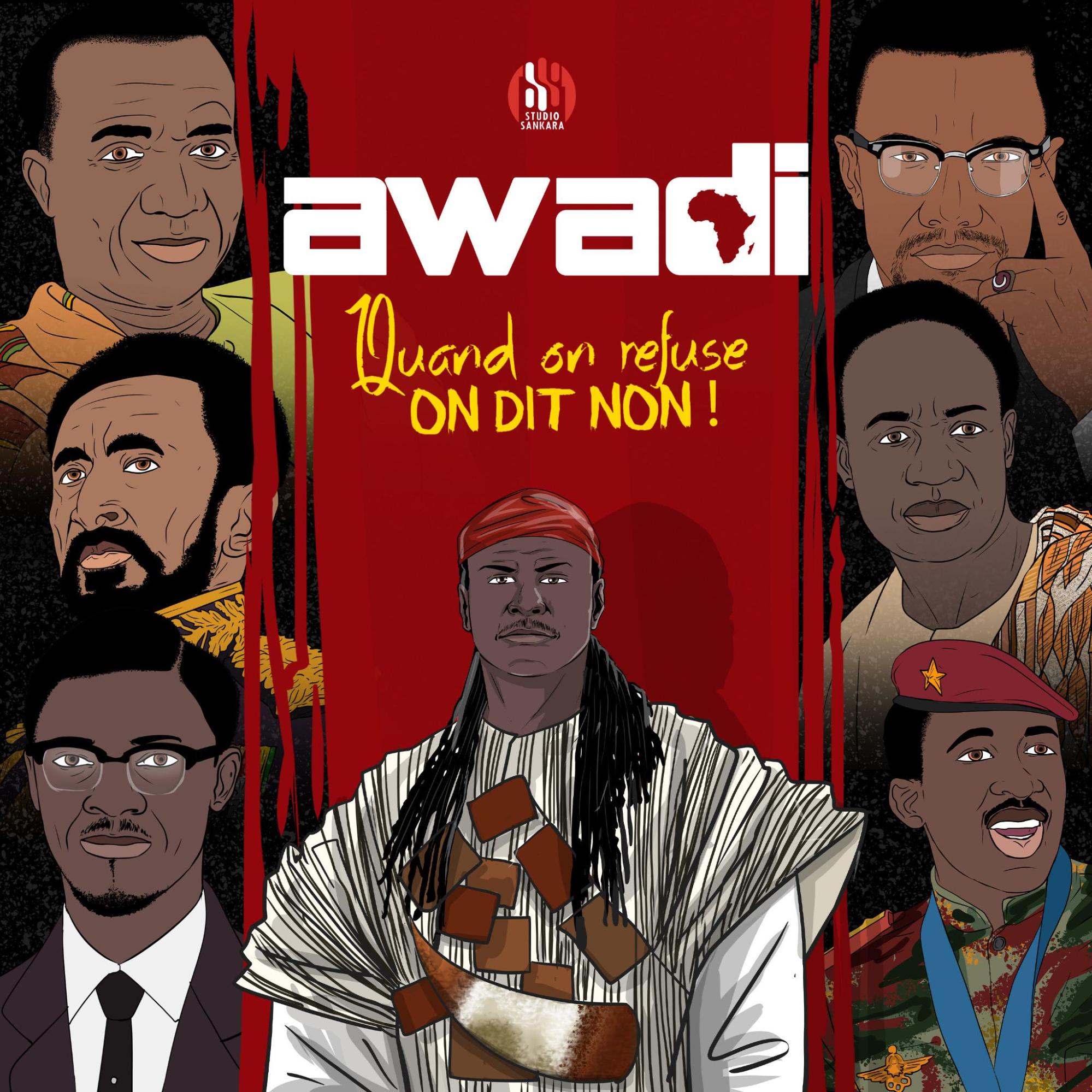
For Awadi, music serves as a tool to engage with political and social movements and to raise awareness of issues that he cares about. “When we have the privilege of having a microphone or having a camera, we have a duty to react—and above all, to act—through the tools we have,” he says. “The tools I have are my music first, it’s my cameras, it’s my stage, and I use that to get my message across. For me, my whole life, music was the way to say the things that are in your heart.”
Through music, he can introduce people to complex and sometimes controversial issues and ideas—and start to sway their thinking and inform their understanding. For example, when Awadi first started criticizing the presence of the French army in Senegal, he recalls people telling him: “You’re taking risks. Be careful not to attack France. They are dangerous.” But over time, the conversation has shifted: “Today, everyone talks about it. They don’t want the army in their country anymore. They understand that these are questions of sovereignty.” Today, he adds, when he hears the president say that the French troops will be withdrawn in six years, “I believe that we have planted the good seed.”
Awadi emphasizes that making political art is a choice and that not everyone can or should make that choice for themselves. “I don’t ask anyone to make engaged music unless they feel it and are ready for it,” he says. “You must be ready for all the necessary sacrifices because it’s a kind of music where you first take a slap before you are applauded…. When it happens, it means that you first took a lot of slaps. If you are ready for slaps, go engage in militant music.”
Over the course of his career, Awadi has often faced harassment in Senegal, including the cancellation of his concerts and threats of violence or detention. “I take these threats very seriously, and I do everything so that they are not carried out by whoever is threatening me. I take that very, very seriously. Otherwise, I wouldn’t be here. I have a family to protect. I also often say that a martyr has nothing to say. One must stay alive.”
Awadi has a different reaction to less severe forms of punishment, such as censorship and exclusion from artistic and cultural spaces. When radios refuse to air his tracks or the governments of certain countries refuse to let him enter or perform, rather than feeling angry or frustrated, he sees an unmistakable sign that his music has had an impact. “At the beginning, you feel frustrated and upset,” he says, but “then you understand that it’s a tribute. Each time a country tells us, I don’t want you because you talk badly, we are proud. For us, that means the message got through.”
“I take these threats very seriously, and I do everything so that they are not carried out by whoever is threatening me. I take that very, very seriously. Otherwise, I wouldn’t be here. I have a family to protect. I also often say that a martyr has nothing to say. One must stay alive.”