
Artist profile
Maykel Castillo Pérez
Rapper
Cuba
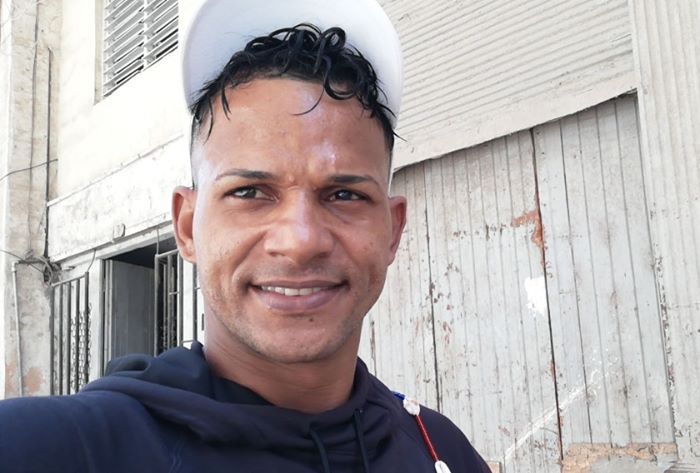
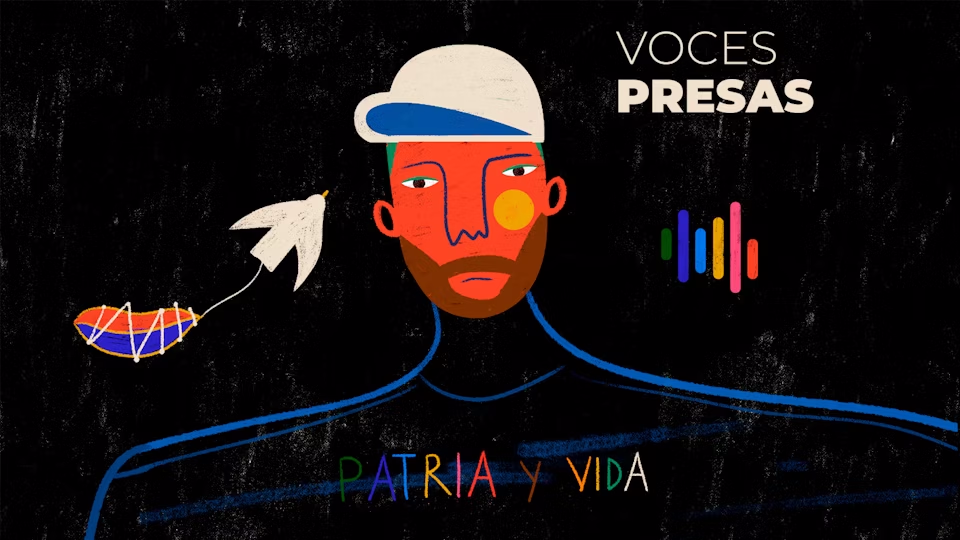
Maykel Castillo Pérez, also known as “el Osorbo,” is a Cuban rapper and visionary of the underground and independent music scene. A two-time Latin Grammy winning musician, he was imprisoned for his artivism, as through his lyrics he calls for freedom and justice for his country.
Castillo Pérez is co-author of the song “Patria y Vida” (Homeland and Life), which re-signifies the old Cuban government slogan “Patria o Muerte” (Homeland or Death). Released in February 2021, the song went viral with at least 14 million views on YouTube. The song is a cry for freedom, solidarity, and denunciation of human rights violations on the island that became an anthem for the peaceful demonstrations that occurred in Cuba on July 11, 2021.
But this great success in Castillo Pérez’s tireless struggle for human rights in Cuba was not a spontaneous accident. It was the culmination of years of suffering from aggressions and repressive attacks because of his art, music, and pro-democracy activism.
His musical work is based on the power of independent and dissident art, rejecting the socio-cultural and political dynamics that marginalize countercurrent voices and ideas. In his songs such as Por ti Señor, DIAZCARAO, De qué me van a hablar and El aletazo de Al Pidio he poses a continuous and forceful critique that recounts the challenges faced by the Cuban people and the lack of respect for their fundamental rights.
Castillo Pérez is one of the founders of the artistic collective Movimiento San Isidro and was part of the campaign against Decree 349, a law restricting artistic freedom. Thus, his resistance through music became a struggle that has included hunger and thirst strikes and other acts of peaceful protest that have highlighted the growing censorship in his country. Additionally, in 2020, he sewed his mouth shut for the first time to denounce the silencing and persecution against him.
The response of the Cuban state was censorship and attempts to curb his public artistic actions. Throughout his artistic career, Maykel Osorbo has been the victim of arbitrary detentions, interrogations, surveillance, threats, acts of repudiation, and intimidation and censorship of his works, among other aggressions. According to information received by secondary sources, the UN Working Group on Arbitrary Detention noted that “It has been documented that, between 14 December 2019 and 18 May 2021, Castillo Pérez was arrested 121 times. He was imprisoned for 1 year and 1 month, from 23 September 2018 to 23 October 2019, including time spent in pretrial detention.”
On May 18, 2021, he was arbitrarily detained (a fact corroborated by the decision A/HRC/WGAD/2021/63 of the UN Working Group on Arbitrary Detention). Furthermore, following a complaint filed by seven international civil society organizations, the UN considers that Maykel Osorbo was imprisoned solely for his pro-democracy activism. According to the UN Committee on Enforced Disappearances, his arrest was followed by 14 days of enforced disappearance.
The trial of Maykel Castillo Pérez, along with artist Luis Manuel Otero Alcántara and three other individuals was held on 30 and 31 May, 2022, at the Marianao Municipal Court in Havana. He was sentenced to nine years in prison for the crimes of contempt, assault, public disorder, and defamation of institutions and organizations on 24 June 2022. Castillo Pérez has been held since 18 May, 2021, in the high-security 5 y Medio prison in Pinar del Río province.
In 2023, Cubanet and other media made public several violations of Castillo Pérez’s rights in prison, including confinement, abuse, and the prohibition or prevention of regular and conjugal visits and telephone calls. In July 2023, in response to these repressive actions, Castillo Pérez demonstrated peacefully–sewing his mouth shut and tattooing “Patria y Vida” on his forearm.
Throughout 2024 and 2025, Castillo Pérez faced ongoing threats and mistreatment while in prison. In April 2024, he was reportedly attacked by a group of inmates, an incident that, according to letters he sent from confinement, may have been orchestrated by authorities to intimidate and silence him. During 2025, he was repeatedly placed in punishment cells for several days at a time–in April, July, August, September, and October.
From June 20 to July 1, 2025, he undertook a hunger strike in protest against ill-treatment, repeated transfers to punishment cells, and the looming threat of relocation to another prison. Castillo Pérez’s family has not been allowed access to his medical records, and his physical condition has continued to decline. His case highlights the persistent abuse and denial of basic human rights faced by political prisoners in Cuba.
Published on September 26, 2023 | Updated on April 8, 2026